

History, places and a sense of the past...
Thursday, 17 September 2015
Conquerors conquered
After four years of work, my new book, Conquerors, on the Portuguese voyages of discovery, was officially published yesterday in the UK. I was lucky enough to have a launch in the wonderful surroundings of the Portuguese Embassy - my thanks to the Ambassador for a gracious and highly enjoyable evening. The US edition will be out in December.


Monday, 14 September 2015
The blog resumes
After a lengthy pause...the past few months have been spent exhaustively correcting proofs, writing articles and talks for my new book - 'Conquerors: How Portugal seized the Indian Ocean and forged the First Global Empire' - out on Thursday in the UK - cover to follow shortly. You'll have to wait until December, I'm afraid, if you're in North America.
In the interim I have also just returned from a fortnight talking on a Zegrahm Expeditions cruise down the Adriatic Coast from Dubrovnik to Malta; on the way tracking the presence of the Venetians in the sea. St Marks's lion is everywhere on the castle walls and doorways of Adriatic towns.
Here are a few random images:
In the interim I have also just returned from a fortnight talking on a Zegrahm Expeditions cruise down the Adriatic Coast from Dubrovnik to Malta; on the way tracking the presence of the Venetians in the sea. St Marks's lion is everywhere on the castle walls and doorways of Adriatic towns.
Here are a few random images:
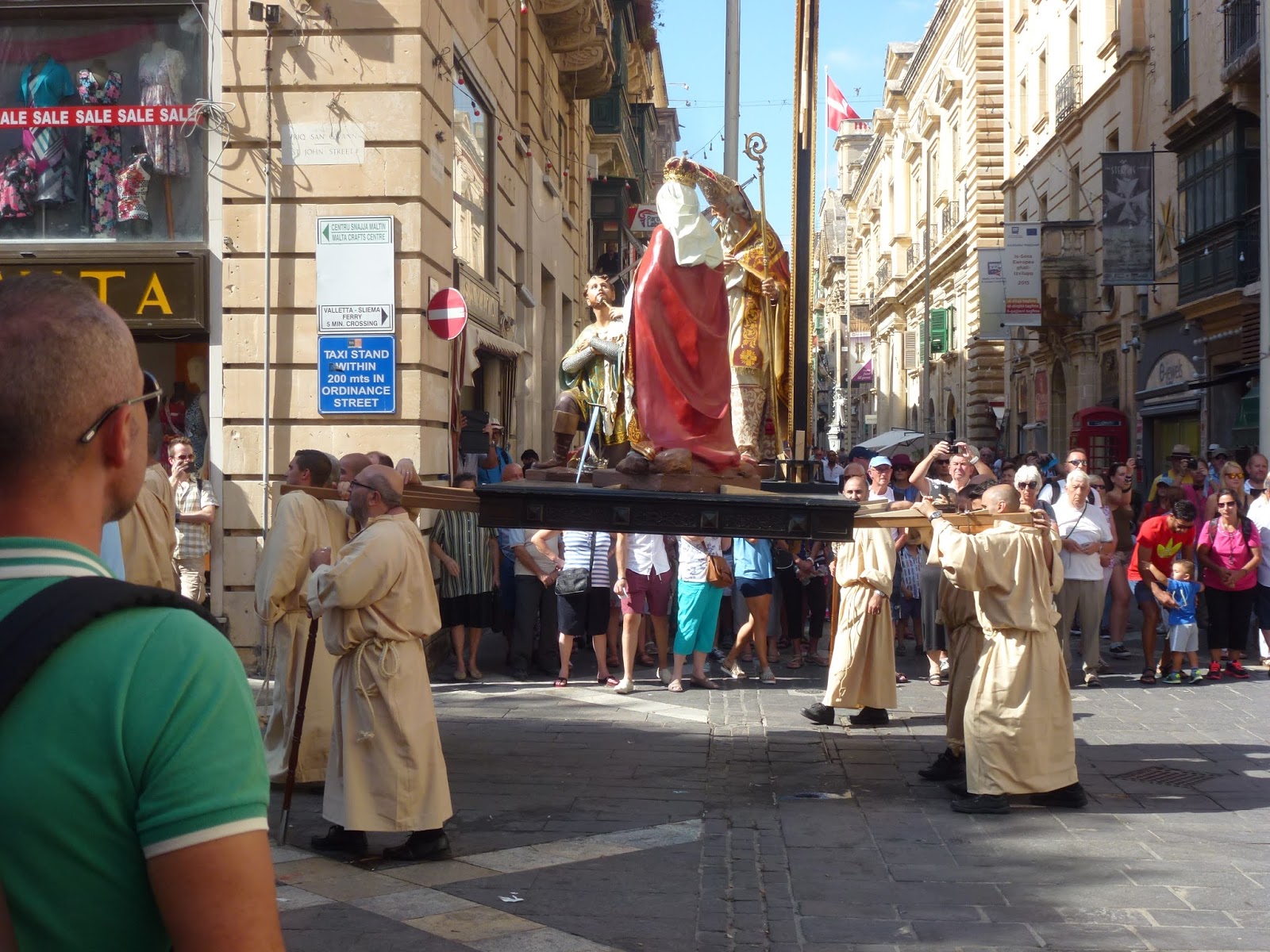 |
| A religious procession in Valletta |
 |
| A particularly bad tempered Venetian lion on the walls of the town of the island of Hvar, Croatia |
 |
| Everyone needs a diving helmet from the Split flea market |
 |
| A small wizard conjures eerie sounds from a three hundred year old brass flute on the ramparts of a castle; behind, the bare hills of Albania - shivers down the spine. |
 |
| The roof of the Emperor Diocletian's mausoleum in his palace in Split
|
Monday, 22 June 2015
Greek tragedies
Storm clouds over the Parthenon. As Greece continues to stagger on through its financial crises I found myself going back through some of my photographs and stumbled upon the cheery image of the Greek flag waving in the Aegean wind on the ferry from Santorini to Piraeus:

And uninhabited islands rising like mirages out of the sea:

And remembered too some words of the great Greek poet George Seferis, writing about his country's unhealed wounds:
Wherever I travel Greece wounds me,
curtains of mountains, archipelagos, naked granite.
They call the one ship that sails AG ONIA 937.
Let's hope for the best for Greece - and the whole of Europe.

And uninhabited islands rising like mirages out of the sea:

And remembered too some words of the great Greek poet George Seferis, writing about his country's unhealed wounds:
Wherever I travel Greece wounds me,
curtains of mountains, archipelagos, naked granite.
They call the one ship that sails AG ONIA 937.
Let's hope for the best for Greece - and the whole of Europe.
Thursday, 28 May 2015
An epitaph
"May your spirit live,
May you spend millions of years,
You who love Thebes,
Sitting with your face to the north wind,
Your eyes beholding happiness."
A small cutting from a newspaper fell out of one of my old notebooks recently with this lovely epitaph to someone. I had no idea where it came from. A quick google revealed that it's an inscription on a wonderful alabaster cup from Tutankhamun's tomb:

Howard Carter had to step over it as he entered the antechamber of the tomb for the first time, and it forms his own epitaph too.

May you spend millions of years,
You who love Thebes,
Sitting with your face to the north wind,
Your eyes beholding happiness."
A small cutting from a newspaper fell out of one of my old notebooks recently with this lovely epitaph to someone. I had no idea where it came from. A quick google revealed that it's an inscription on a wonderful alabaster cup from Tutankhamun's tomb:

Howard Carter had to step over it as he entered the antechamber of the tomb for the first time, and it forms his own epitaph too.
Friday, 10 April 2015
Two hours, ten minutes of war
Recently I unearthed a copy of a letter written during
the First World War – exactly a hundred years ago, in 1915 – from my
great-uncle to his sister, my grandmother. Charles Hudson was a British officer
serving on the Western Front at the Ypres salient. He was a daredevil, addicted
to adventure, and not beyond disobeying orders. To offset the passive endurance
of trench warfare, he had developed a taste for ‘night crawling’ – creeping out
in the dark, usually unarmed, and accompanied by one of his men to inspect
enemy positions and cut their barbed wire. On one occasion he finds himself peering through a chink into
a German dugout: ‘The door in the trench was open…the men in the dugout lit a
candle as the door closed and in the light I could see the men opposite me quite
distinctly. Three sat in a row on a bench. I had never seen the enemy, other
than prisoners, at a range of a few feet and I was vastly intrigued. Then a man
just the other side of the wall shifted his position so that the back of his
neck blocked my view. I blew gently and the man scratched his neck but did not
move.’!
The letter to my grandmother details his next - illegal - excursion.
I’ve shortened it somewhat but it’s a vivid, heart stopping account of living in the moment.
Dear Dolly,
You may be pleased to hear I was absolutely
forbidden by the General to go again as I am Coy [Company] commander, rather
rot for me but…
I went with Stafford again, at 4.30 am.
Conversation:
“Damned cold, Sergeant.”
“Yes Sir, moon’s a bit bright, but it will be going
down soon.” “Yes Sir, better take some bombs.” “Yes Sir, shall I get them Sir?”
“We’ll pick them up at the listening post (in
front). Sentries warned?”
“Yes Sir.”
So off we go through a covered gap in the parapet
and down the ledge.
“Who’s that?” (whispered)
“Sherwood Foresters. Captain Hudson. All quiet
Corporal?”
“Yes Sir.”
“We’re going out in front to the left.”
“Very well Sir.”
We are now 150 yards from Fritz and the moon is
bright, so we bend and walk quietly onto the road running diagonally across the
front into the Bosche line. There is a stream the far side of this – boards
have been put down across it at intervals and must have fallen it – about 20
yards down we can cross. We stop and listen – Swish! – and down we plop (for a flare lights everything up). It
goes out with a hiss and over the board we trundle on hands and knees.
Still.
Apparently no one has seen so we proceed to crawl
through a line of ‘French’ wire. Now for 100 yards dead flat weed land with
here and there a shell hole or old webbing equipment lying in little heaps!
These we avoid. This means a slow, slow crawl head down, propelling ourselves
by toes and forearm, body and legs flat on the ground, like a snake.
A working party of Huns are in their lair. We can
just see dark shadows and hear the sergeant, who is sitting down. He’s got a
bad cold! We must wait a bit, the moon’s getting low but it’s too bright. Now 5
a.m. They will stop soon and if we go on we may meet a covering party lying
low.
5.10.
5.15.
5.25.
5.30.
And the moon’s gone.
“Got the bombs Sergeant?”
“No Sir, I forgot them!”
‘Huns’ and the last crawl starts.
The Bosch is moving and we crawl quickly on to the
wire – past two huge shell holes to the first row…Out comes the wire cutter. I
hold the strands to prevent them jumping apart when cut and Stafford cuts…Two
or three tins are cut off as we go. (These tins are hung to give warning and
one must beware of them)…
It is getting light, a long streak has already
appeared…
Stafford has to extract me twice from the wire…He
leads back down a bit of ditch.
Suddenly a sentry fires two shots which spit on the
ground a few yards in front. We lie absolutely flat, scarcely daring to breathe
– has he seen? Then we go on with our trophies [pieces of wire], the ditch gets
a little deeper, giving cover! My heart beating 19 to the dozen – will it mean
a machine gun? Stafford is gaining and leads by ten yards.
“My God,” I think, “it is a listening post ahead and
this is the ditch to it. I must stop him.”
I whisper “Stafford, Stafford!” and feel I am
shouting. He stops, thinking I have got it.
“Do you think it’s a listening post? There! By the mound
– listen.”
“Perhaps we had better cut across to the left Sir.”
“Very well.”
This time I lead. Thank God, the ditch and the road
over the ditch, and we run like hell, bent double. Suddenly I go a fearful
cropper and a machine gun is rattling in the distance and the streak is getting
bigger every minute.
“Are you all right Sir?” From Stafford.
I laugh, “Forgot that damned wire.” (Our own wire
outside our listening post.)
Soon we are behind the friendly parapet and it is
day. We are ourselves again, but there’s a subtle cord between us, stronger
than barbed wire, that will take a lot of cutting. Twenty to seven, 2 hours 10
minutes of life – war at its best. But shelling, no, that’s death at its worst.
And I can’t go again, it’s a vice. Immediately after I swear I’ll never do it
again. The next night I find myself aching after ‘No Man’s Land’.
Some yarn I think, worse than the Wide World, tell
me if it sounds realistic, it’s all the truth.
My nerve has quite come back again. I felt a bit
shaky when I started…
Bye-bye
Ever your loving Brother
Charlie
 |
| Charles Hudson V.C. |
Saturday, 28 March 2015
Tomas Tranströmer
When I heard of the death of Tomas Tranströmer, the Swedish
Nobel prize winning poet, I fetched down my copy (English translation only!). I have no idea what his poems sound like in
Swedish but I imagine that they translate well. He’s a writer who
conjures a sense of place: the forests and snowy distances of Sweden, the mist-shrouded islands of the Baltic. There's a feeling of imminence in the pine trees and the deep silence, moments of mysterious epiphany and transcendence. A train stops suddenly at 2 a.m. on a lonely plain. 'Days - like Aztec hieroglyphs'. The impact of a death.
After someone’s death
Once there was a shockwhich left behind a long pallid glimmering comet's tail.
It contains us. It makes TV pictures blurred.
It deposits itself as cold drops on the aerials.
You can still shuffle along on skis in the winter sun
among groves where last year's leaves still hang
They are like pages torn from old telephone directories -
the subscriber's names are consumed by the cold.
It is still beautiful to feel your heart throbbing.
But often the shadow feels more real than the body.
The samurai looks insignificant
besides his armour of black dragon-scales.
(Translated by Robin Fulton)
Thursday, 19 March 2015
End of the line for Istanbul's Ottoman railway station?
Nostalgia comes in many forms. Quite high up the scale for
me is the Haydarpaşa railway terminus in Istanbul. For over a century this
magnificent ormolu late Ottoman edifice with its nods at art deco, has been the
beginning and the end of journeys. It ‘s a place of grandeur and confusion
– where Europe tilts into the Orient. It looks out over the
sea: at the Galata bridge that spans the Golden Horn; at the fussy steamers
smudging the sky with smoke as they ply the Bosphorus; at the swarms of
people passing to; at the incessant buying,
selling, loitering, fishing and travelling to and from mysterious destinations.


Through the Haydarpaşa ran the Berlin to Baghdad railway.
The Orient Express ended here. It has seen pass along its platforms explorers,
spies, soldiers, diplomats, refugees, gastarbeiter, pilgrims to Mecca – and the
plain curious. Agatha Christie came on this line. Old postcards summon up a
lost world of moustachioed porters, portmanteaux and the grand Pera Palace
Hotel, fezzes and dragomans.


The Orient 'Express' brought
me to and from Istanbul a few times in the 1970s – not a plush Pullman service,
but a slow, low-grade clanking journey courtesy of the unreliable rolling stock
of central Europe, two days sitting semi-upright, semi-comatose with brief
stops to encounter the expensive air of Switzerland, the stern demeanour of Bulgarian
customs officials, the offerings of food salesmen on the platforms of Belgrade
and Sofia, the enjoyment and annoyance of fellow travellers.
The train came via Calais and Paris, Mussolini’s slab of a
station in Venice and Tito’s Yugoslavia, through fields of sunflowers and wheat
where headscarved women wielded large scythes, past beehives, tiny
houses, flocks of birds, communist apartment blocks and sleeping dogs. And on
into Istanbul, running along the shore, with the Sea of Marmara glittering in
the sunlight on one side, on the other the crumbling walls of old Constantinople
and the ruins of Byzantine palaces converted into shacks and metal bashing workshops.
Finally, exhausted but exhilarated by this jumble of passing life, the train ushers
you under the iron pillared canopy of the station – and Istanbul begins. You
step out of the doors, startled and disorientated by the pounding of new
sensations: the smell of frying fish, car exhaust, roasting chestnuts and sea
water; the street cries of sellers of sesame rolls, lottery tickets, shoe shining
services, football shirts and mobile phone services; the squabbling of gulls; the viscid,
malodorous waters of the once Golden Horn – admittedly cleaner today than forty
years ago. And the Galata Bridge across it, now a fixed structure, but until
the 1990s a series of connected pontoons that rippled disconcertingly beneath
your feet, evidence that Istanbul that possesses a vivid magic.
The last time I looked in, the Haydarpaşa was still
receiving trains. Now it’s probably a shell. A new station has been constructed
on the Marmara shore and the Haydarpaşa seems on the way to becoming a piece of
real estate up for grabs to private interests. An 'accidental' fire ripped through its roof in 2010. Istanbul is falling prey to the
blight of many big cities: the privatisation of public spaces, around which the protests in Taksim Square
revolved, the squeezing out of the poor,
the destruction of inconvenient but iconic buildings – an attack not quite on
the scale of the Mafia’s sack of Palermo in the 1960s, but the cold hand of big
money is clutching at the city's fabric. The Haydarpaşa came to mind because I read a
Turkish blogger on all this.


Subscribe to:
Posts (Atom)