Sunday, 2 February 2014

A word from the sultan


In 1849, a British admiral, Sir Adolphus Slade, was seconded to the Ottoman sultan in Istanbul, where he served for seventeen years as administrative head of the navy. He wrote extensively about his experiences and travels.  The Ottoman empire was in serial decline, already the Sick Man of Europe, trying to modernise itself amongst the rapidly developing industrial nations of Western Europe – at a time when Queen Victoria sat on the throne of England - yet still bound to the oriental practices of despotic sultans that stretched far into the past .

Probably no event impressed on Slade the character, institutions and power of the sultans so strongly as the fate of an Ottoman official, called Hamid.

Slade had a house on the Bosporus, looking out over the water. Hamid was his neighbour.  The admiral recalled the fateful day in vivid detail.
 

“Poor Hamid, peace to his errors! I knew him well. The evening before his catastrophe we smoked a pipe together. Late that night the captain pasha [admiral of the fleet] returned from Constantinople, where he had been assisting at a divan [sultan’s council], with the fatal order in his bosom.

The next morning, the sun just peeping over the Asiatic hills, I saw a barge row swiftly from the flag-ship to the nazir’s [official’s] house, which overhung the water. Suspecting something I put a question to the officer of the boat, as he passed my window. He shook his head in reply.

The nazir was still reposing.

“The pasha wants you,” was the pithy reply.

“Why, what can he require?”

“You will soon learn. Rise.”

He adjusted his dress, performed his ablutions, prayed and stepped into the barge. I was already dressed and on the quay; passing which, he waved his hand to me, and said something, I thought “farewell’, so I took a caique and followed.

The principal officers of the fleet received him on the quarterdeck; the man whose smiles they courted the day before, they received with insults. Hassan, rialabey, gave him a kick. At this he crossed his hands and exclaimed, “I understand.”

He was then conducted down onto the main deck; there his accusation was read to him, amongst others, the unjust one of grinding the poor. He betrayed no fear, neither probably, would he have said one word, had not the captain pasha at that moment come out of his cabin to look at his old friend, who, one little spark still yet burning amongst the embers of hope, cried once, “Aman!” [mercy].

He might have spared his breath. The pasha answered by a slight wave of the hand, the usual signal in such cases. The guards understood it, and taking the nazir by the arms, led him below to the prison, where two slaves attended.

Not thinking for a moment that he was going straight to death, I was about to follow, moved by an impulse of pity or curiosity, when the pasha motioned me to come into his cabin. The bowstring soon did its task, and in a few minutes, the receipt, poor Hamid’s head, the countenance calm as in sleep, was brought up to be shown to the pasha before being transmitted to the seraglio [palace].

It is startling to see a human head carried in a platter up the ladder, down which you had seen it descend, just before, sentient and well posed on a pair of shoulders. This had an effect even on the cold-blooded Osmanleys under the half-deck. They involuntarily shuddered, as well they might: the reign of terror was begun, when no man might say that his turn would not come next.”

The sultan always required visible proof that his orders had been carried out. Neatly presented in a silken bag.


Wednesday, 22 January 2014

'I smelt history'


It’s the kind of Indiana Jones moment that we all might dream of – I certainly did as a child, reading popular archaeology books about the discovery of Tutankhamun ‘s tomb and the pyramids of ancient Egypt. The moment when you make hole in the stone slab and peer down through the darkness of thousands of years to glimpse something quite extraordinary.

That moment came to the Egyptian archaeologist Kamal el-Mallakh in the spring of 1954. Workmen clearing debris around the base of the Great Pyramid of Giza hit upon a stone structure: forty-one limestone blocks with carefully mortared seams. El-Mallakh chiselled a hole in one of the blocks and peered down inside.  A rectangular stone pit. Darkness. And an aroma rising from dry earth. He could make nothing out. ‘And then with my eyes closed, I smelt incense, a very holy, holy, holy smell. I smelt time…I smelt centuries…I smelt history.’

What El-Mallakh had found was not a glittering gold-masked mummy but something in its own way as valuable and miraculous. A boat – dry stored and completely intact in the airtight tomb – the funeral vessel of the pharaoh Khufu.  The boat had been disassembled; but all the pieces were there, laid out intact as if they had been just cut. Forty-four metres long, constructed almost entirely with cedars from Lebanon, the pieces marked with carpenters’ symbols to aid its assembly, a construction as astonishing in its own way as the pyramids themselves. A testament to the technologies of the ancient Egyptians.
Khufu Boat Museum


It took nearly thirty years to reconstruct this three-dimensional jigsaw puzzle, sewing it back together, as it had been, with five thousand metres of cordage – the traditional method of boat construction in large parts of the world, particularly the Indian Ocean, right into modern times.
Khufu Boat Museum
Original rope from the boat made from grass


This long slim processional craft might once have transported Khufu’s embalmed body to Giza –or been specially built to carry him on a journey into the afterlife. It has a deckhouse to the stern, then a light frame to support an awning, shielding the pharaoh from the fierce heat of the sun; its raised prow echoes the shape of the papyrus boats that once plied the Nile.  The frustration of maritime archaeologists is that often so little survives of ancient ships - much is just guesswork based on out-of-scale representations , images carved on stone or pictures. Here is the real deal – an authentic transmission from 4500 years ago – really like touching the past. It’s in a museum beside the pyramid. The Khufu boat is just one nugget I’ve gained from reading a new book for review –The Sea and Civilization:  A Maritime History of the World by Lincoln Paine.
Khufu Boat Museum


Monday, 13 January 2014

More from the mafia

A coded message believe to contain the details of a secretive, mafia initiation process.

This mysterious, neatly drawn secret code , found recently during the investigation of a Rome murder case, has become the subject of wide interest. It took two policemen with a fascination with crosswords several weeks to crack the invented alphabet. It's the formula for the initiation ceremony into the 'Ndrangheta, the criminal organisation based in Calabria in southern Italy now challenging the Sicilian Cos Nostra for supremacy amongst the Italian mafia clans. It's a rare glimpse into the inner world of mafia recruitment and affiliation - as reported in a BBC article recently.

Tuesday, 31 December 2013

'Thus ends this year of public wonder and mischief'

I have been reading my way incredibly slowly - that is over a course of years - through the so-called Shorter Pepys (just 1000 pages -a third of the original diary). I read a chunk, put the marker in, then return to it at the same point a year or two later. It's a long term project, exploring the uncensored inner world of this complex, energetic man: ravenously alive, insatiably curious, egotistical, vain, compassionate and completely human. And I've got to 1666 - the year of the great fire of London, of which he wrote an extraordinarily vivid account.
Pepys was methodical as well as spirited. On the last day of each year, he totted up his accounts, both financial and non-material. 1666 sees him extremely well-off. He has 6200 pounds - 1800 more than the previous year. It's unclear exactly where this money comes from - many of the nuances of his daily dealings pass over my head - but it seems he takes bribes in the course of his work, as secretary to the Navy Board concerned with the awarding of supply contracts during a  tense period of war with the Dutch, yet at the same time, as a civil servant he's also outstandingly industrious, efficient and intelligent - by the standard of the times - and loyal to two kings, Charles II and James II, patently unworthy of respect. As the diary is written in a form of encoded shorthand he’s breathtakingly frank about himself – and other people, both low and high.
'Thus ends this year of public wonder and mischief to this nation - and therefore generally wished by all people to have an end. Myself and family well, having four maids , and one clerk, Tom, in my house...Our healths all well; only, my eyes, with overworking them, as sore as soon as candlelight comes to them, and not else. Public matters in a most sad condition. Seamen discouraged for want of pay, and are become not to be governed...Our enemies, French and Dutch, great, and grow more, by our poverty. The Parliament backward in raising, because jealous of spending, of money. The City less and less likely to be built again, everybody settling elsewhere, and nobody encouraged to trade. A sad, vicious, negligent Court, and all sober men fearful of the ruin of the whole kingdom this next year - from which, good God deliver us.'
And then, a typically, Pepysian cheering closing of the year’s account - moving from the state of the nation to worldly self-satisfaction: 'One thing I reckon remarkable in my own condition is that I am come to abound in good plate, so as at all entertainments to be wholly served with silver plates, having two dozen and a half.'
Over the reach of three hundred years he gazes out at us from a portrait he had commissioned, and of which he was deeply proud, holding a musical composition of his own - he was not backward in praising his own songs - in a coat that has the sheen of prosperity to it. He looks sensuous, vain, inquisitive, interested, human. Happy New Year.

.
 

Friday, 20 December 2013

An interview with Robert Horvat

Recently Robert Horvat, who writes a mean history blog - and far more attentively than I do, asked me some questions about history and writing. Here are the replies , woven around his own commentary. I'm not sure about being 'Narrative History's Man of the moment' - more like someone who writes the occasional book very slowly! Just now I'm crawling over the surface of the Portuguese history of two decades in the Indian Ocean during the early sixteenth century - though it's fascinating, and a privilege to be able to do such things. 

Thursday, 12 December 2013

The shop signs of Valletta

My recent trip to Malta gave me the chance to explore Valletta again. I love the long straight vistas of the streets laid out by the knights of St John on a visionary grid pattern in the sixteenth century.


They ride the rise and fall of the land in severe straight lines, shaded from the sun, overhung with loggias and balconies. There’s a sense of expectation in the way the eye is led away towards the distant blue line of Mediterranean sea where the peninsula ends.


What really fascinated me was the old fashioned signage on shops and hotels – like being carried back into the sign writing of sixty or seventy years ago. A dusty memory of the British empire interspersed with Catholic shrines on street corners and small votive plaques above doorways. Here's a few of them:


Thursday, 5 December 2013

'A person who is afraid'


I’ve just returned from nine days on a ship, talking about the history of Malta and Sicily – a welcome break from the shortening days of an English winter (which have a charm all of their own). We departed from Palermo. The airport there is now called ‘The Falcone and Borsellino airport’ in honour of two anti-mafia judges.

The mafia’s origins lie deep within the sadly dysfunctional history of this beautiful and once wealthy island. Centuries, millennia of plunder by outsiders have stripped Sicily and plunged it into deepening cycles of under-development and distrust of authority. Deprived of a sense of civic unity, the mafia inserted itself as a parasitic  intermediary between downtrodden peasants and their rulers. It profited from the chaos following the Second World War, but it was the arrival of heroine in the seventies that accelerated the viciousness of mafia activities – and its ability to corrupt the core institutions of the Italian state. The body count started to pile up – judges, lawyers, communists, politicians, priests – killed in what has become known as the era of the ‘Illustrious Corpses’.


General dalla Chiesa

There’s evidence that Giulio Andreotti, the most successful politician in post-war Italy was complicit in mafia dealing. Tried, he escaped conviction through legal loopholes. (There’s a curious circularity to Sicilian history. Two thousand years earlier, Cicero prepared a similar court case again the Roman governor of Sicily, Gaius Verres, for extortion, torture and murder. Verres slipped away into exile to avoid the conviction.)
 
General Alberto dalla Chiesa, a soldier with a track record of success against the Red Brigade, was gunned down with his wife in the street in 1982 – a death in which Andreotti was held to be complicit. Many people just disappeared – killed, in a sinister euphemism, by ‘The White Shotgun’. Young men from the slums of Palermo, strung out on heroine, were easily recruited into the lower echelons to conduct drive-by shootings and garottings. The profits from heroine were huge. By 1982, the Sicilian mafia were said to control 80% of the heroine trade in the north east of the USA, remitting over a billion dollars a year to Sicily.


Riina 'the Beast'
The Corleone clan emerged as the leading faction. Led by the incredibly violent, Salvatore ‘Toto’ Riina, ‘the Beast’, responsible for some 800 deaths, he broke the pact between competing clans and ruthlessly started to wipe out mafia rivals. But Riina’s transgressions increased the possibility that one day a vengeful rival would talk to the police.


 Into this arena stepped two determined and patriotic anti-mafia magistrates, Giovanni Falcone and Paolo Borsellino, Palermo-born childhood friends who understood the mafia mentality. The breakthrough came with the arrest of a Mafiosi in Brazil, Tommaso Buschetta, in 1982. Bruschetta, who had lost many allies to the Corleone clan, was prepared to talk.

Giovanni Falcone and Paolo Borsellino
Buscetta at the trials
 After years of careful preparation, and the construction of a bomb proof court house adjacent to the prison, the so called Maxi-trials of 1986-1987 based on Buschetta’s evidence resulted in 19 life sentences and 338 other sentences totalling 2065 years. Falcone and Borsollino had torn a hole in the structure of the mafia. Furious at their failure to reverse the verdicts – a habitual  procedure – Riina’s clan killed the political stooge, Salvatore Lima, who had promised to fix it. Then they turned on the magistrates.


Falcone and Borsellino were realistic enough to understand that their lives might not be long. On 23 May 1992 Falcone and his wife were killed by a massive car bomb as they drove from the airport.

 
23 May 1992
 57 days later Borsellino was killed in Palermo by a similar bomb:


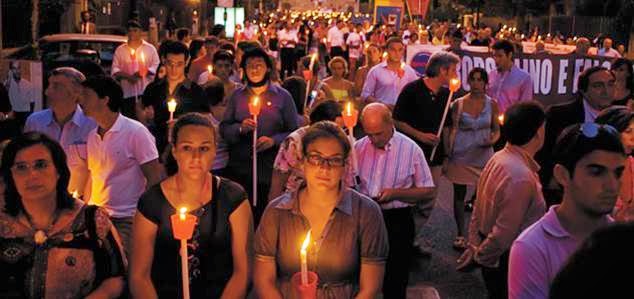
These spectacular deaths however swept the Sicilian people into a wave of protest and civic patriotism. They came out onto the streets and threw coins at mafia funerals as a sign of mocking disgust. Women were particularly prominent in a new determination to change the mentality of Sicilian people. The will to fight back had gained a hold over the imaginations of citizens.

"It was years since I’d seen the faces of honest and brave Italians. I saw crowds of young people, as if they’d woken from a deep sleep.” Giorgio Bocca, Journalist
The car bombings also forced the state to be resolute. When Riina was bundled out of car in Palermo in 1993 by masked men he was relieved to discover they were policeman. (If anyone had wanted to arrest Riina earlier he wouldn’t have been hard to find – his children were enrolled in school in Corleone and he frequently used the local hospital.) In 1996 they captured the particularly detested hit man, Giovanni Brusca:
 
Bernard Provanzano, nicknamed ‘the Tractor’, who took over the Corleone clan, was snatched in 2006. All these men are held in secure solitary confinement – to stop them running their operations from behind bars – or from being murdered by rivals. (The poisoned espresso has seen the death of at least one mafia boss in his cell.) So tightly have they been isolated that human rights groups have protested against their treatment.

 
In 2004 a movement started to try to persuade people from paying the pizzo – the protection money businesses give to the mafia, which drain huge sums out of the Sicilian economy. Now a growing number of businesses sport the addio pizzo sign – ‘goodbye to the pizzo’ – in their windows as a sign that they refuse to pay. But there’s a long way to go. In 2008 the University of Palermo estimated that 80% of businesses still pay – at a cost of $1.25 billion dollars a year.

'An entire people that pays the pizzo is a people without dignity.'


In a shop in Palermo I photographed Borsellino's words on a T shirt:
'A person who is afraid dies every day, someone who isn't only dies once.'