Thursday, 12 December 2013

The shop signs of Valletta

My recent trip to Malta gave me the chance to explore Valletta again. I love the long straight vistas of the streets laid out by the knights of St John on a visionary grid pattern in the sixteenth century.


They ride the rise and fall of the land in severe straight lines, shaded from the sun, overhung with loggias and balconies. There’s a sense of expectation in the way the eye is led away towards the distant blue line of Mediterranean sea where the peninsula ends.


What really fascinated me was the old fashioned signage on shops and hotels – like being carried back into the sign writing of sixty or seventy years ago. A dusty memory of the British empire interspersed with Catholic shrines on street corners and small votive plaques above doorways. Here's a few of them:


Thursday, 5 December 2013

'A person who is afraid'


I’ve just returned from nine days on a ship, talking about the history of Malta and Sicily – a welcome break from the shortening days of an English winter (which have a charm all of their own). We departed from Palermo. The airport there is now called ‘The Falcone and Borsellino airport’ in honour of two anti-mafia judges.

The mafia’s origins lie deep within the sadly dysfunctional history of this beautiful and once wealthy island. Centuries, millennia of plunder by outsiders have stripped Sicily and plunged it into deepening cycles of under-development and distrust of authority. Deprived of a sense of civic unity, the mafia inserted itself as a parasitic  intermediary between downtrodden peasants and their rulers. It profited from the chaos following the Second World War, but it was the arrival of heroine in the seventies that accelerated the viciousness of mafia activities – and its ability to corrupt the core institutions of the Italian state. The body count started to pile up – judges, lawyers, communists, politicians, priests – killed in what has become known as the era of the ‘Illustrious Corpses’.


General dalla Chiesa

There’s evidence that Giulio Andreotti, the most successful politician in post-war Italy was complicit in mafia dealing. Tried, he escaped conviction through legal loopholes. (There’s a curious circularity to Sicilian history. Two thousand years earlier, Cicero prepared a similar court case again the Roman governor of Sicily, Gaius Verres, for extortion, torture and murder. Verres slipped away into exile to avoid the conviction.)
 
General Alberto dalla Chiesa, a soldier with a track record of success against the Red Brigade, was gunned down with his wife in the street in 1982 – a death in which Andreotti was held to be complicit. Many people just disappeared – killed, in a sinister euphemism, by ‘The White Shotgun’. Young men from the slums of Palermo, strung out on heroine, were easily recruited into the lower echelons to conduct drive-by shootings and garottings. The profits from heroine were huge. By 1982, the Sicilian mafia were said to control 80% of the heroine trade in the north east of the USA, remitting over a billion dollars a year to Sicily.


Riina 'the Beast'
The Corleone clan emerged as the leading faction. Led by the incredibly violent, Salvatore ‘Toto’ Riina, ‘the Beast’, responsible for some 800 deaths, he broke the pact between competing clans and ruthlessly started to wipe out mafia rivals. But Riina’s transgressions increased the possibility that one day a vengeful rival would talk to the police.


 Into this arena stepped two determined and patriotic anti-mafia magistrates, Giovanni Falcone and Paolo Borsellino, Palermo-born childhood friends who understood the mafia mentality. The breakthrough came with the arrest of a Mafiosi in Brazil, Tommaso Buschetta, in 1982. Bruschetta, who had lost many allies to the Corleone clan, was prepared to talk.

Giovanni Falcone and Paolo Borsellino
Buscetta at the trials
 After years of careful preparation, and the construction of a bomb proof court house adjacent to the prison, the so called Maxi-trials of 1986-1987 based on Buschetta’s evidence resulted in 19 life sentences and 338 other sentences totalling 2065 years. Falcone and Borsollino had torn a hole in the structure of the mafia. Furious at their failure to reverse the verdicts – a habitual  procedure – Riina’s clan killed the political stooge, Salvatore Lima, who had promised to fix it. Then they turned on the magistrates.


Falcone and Borsellino were realistic enough to understand that their lives might not be long. On 23 May 1992 Falcone and his wife were killed by a massive car bomb as they drove from the airport.

 
23 May 1992
 57 days later Borsellino was killed in Palermo by a similar bomb:


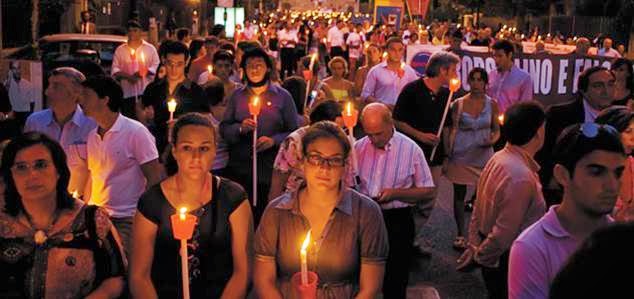
These spectacular deaths however swept the Sicilian people into a wave of protest and civic patriotism. They came out onto the streets and threw coins at mafia funerals as a sign of mocking disgust. Women were particularly prominent in a new determination to change the mentality of Sicilian people. The will to fight back had gained a hold over the imaginations of citizens.

"It was years since I’d seen the faces of honest and brave Italians. I saw crowds of young people, as if they’d woken from a deep sleep.” Giorgio Bocca, Journalist
The car bombings also forced the state to be resolute. When Riina was bundled out of car in Palermo in 1993 by masked men he was relieved to discover they were policeman. (If anyone had wanted to arrest Riina earlier he wouldn’t have been hard to find – his children were enrolled in school in Corleone and he frequently used the local hospital.) In 1996 they captured the particularly detested hit man, Giovanni Brusca:
 
Bernard Provanzano, nicknamed ‘the Tractor’, who took over the Corleone clan, was snatched in 2006. All these men are held in secure solitary confinement – to stop them running their operations from behind bars – or from being murdered by rivals. (The poisoned espresso has seen the death of at least one mafia boss in his cell.) So tightly have they been isolated that human rights groups have protested against their treatment.

 
In 2004 a movement started to try to persuade people from paying the pizzo – the protection money businesses give to the mafia, which drain huge sums out of the Sicilian economy. Now a growing number of businesses sport the addio pizzo sign – ‘goodbye to the pizzo’ – in their windows as a sign that they refuse to pay. But there’s a long way to go. In 2008 the University of Palermo estimated that 80% of businesses still pay – at a cost of $1.25 billion dollars a year.

'An entire people that pays the pizzo is a people without dignity.'


In a shop in Palermo I photographed Borsellino's words on a T shirt:
'A person who is afraid dies every day, someone who isn't only dies once.'


Monday, 21 October 2013

Empires of the Sea en espanol!


Much of Empires of the Sea is to do with the history of Spain - so it's really nice, and a little daunting, to see a Spanish version.
 

Sunday, 20 October 2013

Fill up the car while you get married?

This is the photo that caught my attention this week. A warm Greek night. The golden lights of the petrol station glowing in the dark. On the right, just visible, the illuminated suspension bridge that spans the gulf of Corinth, joining the Peloponnese to mainland Greece. And on the forecourt, between the manhole covers, people are dancing. The woman in white with her back to the camera is the bride. Welcome to a Greek austerity wedding.

There's something incredibly moving about this image. A sense of solidarity, of tradition, of the ability to celebrate in adversity. And Greek hospitality. The Belgian photographer passing by who took this picture was welcomed into the circle of light, plied with drinks and stayed until three in the morning.

Picture of the week: Crisis wedding party

Friday, 11 October 2013

Uncle Joe's holiday hide-away


As it happens I had no time to see Suleiman the Magnificent (see blog entry of 2 September), when I was in Istanbul – I was at the start of a fortnight’s lecturing on Zegrahm Expedition’s circumnavigation of the Black Sea – a great two-week trip round the coast of Turkey, Georgia, Russia, the Ukraine, Romania and Bulgaria. Instead of Suleiman’s tomb I got to see Stalin’s get-away from the toils of oppressing the Russian people: his dacha outside Sochi.

Set in fir woods on the airy hills above Russia’s ‘Mediterranean’ coast – it was a fascinating insight into the man – a mixture of domesticity and paranoia in equal measures. A long low series of buildings around a verdant courtyard, protected by four concentric rings of security and painted green for camouflage – Stalin was taking no chances.
 
 
On the mountain above he ordered the erection of a tall look-out tower; in his working room he had a bizarre bullet proof sofa – the very last resort one would have thought and only of any use if being shot from behind – and concealed alcoves outside rooms for burly guards.


Stalin 'at the helm' in his work room. The telephone has no dialling features. It went straight through to just one destination - the Kremlin. His day bed is behind and is extremely short - he was tiny, only 5 foot 3.

And yet the place also felt deeply pleasant. Unpretentious but beautiful wooden walls and ceilings, spacious verandas looking out into the forest where Joe and his family would while away afternoons around the samovar, a billiard table and chess board – I wonder who won all the games – an indoor swimming pool. A sense of deep tranquillity in the Russian woods. When it all got too much the family man and epic mass murderer would come here for up to three months at a time. To forget.


The luxury pool


A meal in the ogre's lair?

The next day we went Yalta and stared at the huge round table where Stalin fooled Roosevelt and Churchill at the Yalta conference in 1945.

Saturday, 28 September 2013

The man who saved the world


The early hours of 12 September 1983.  Stanislav Petrov, a civilian in a military system, is on duty monitoring the USSR’s nuclear war early-warning system. The computer registers an incoming US missile strike. The siren howls. His screen lights up and flashes the peremptory order ‘Launch it’. Petrov is under default order to press the button. He has to act. What should he do?

Monday, 2 September 2013

Searching for the sultan's heart

In September 1566, Sultan Suleiman the Magnificent was bogged down before the walls of Szigetvar, an insignificant Hungarian fortress. He was seventy two years old. It was his eleventh campaign. Suleiman had spent years in the saddle, extending the reach of the Ottoman empire. He had shattered the Hungarian before, at Mohacs in 1526; the skulls of the defeated still whitened the plains, but the wars went on, were never ending. Frustrated by the resistance of this military pimple disturbing the projects of the 'The Shadow of God on Earth' he seemed to have become enveloped in gloom. His long and brilliant reign had been dogged by tragedy, revolt, disillusionment. The sultan had become reclusive, pious and grave. 'This chimney is still burning, and the great drum roll of conquest has yet to be heard', he wrote from his magnificently embroidered tent. A few hours later he was dead.


The elderly Suleiman, haggard with the cares of office.


The body was embalmed secretly, packed into a chest and trundled back to Istanbul, whilst a body double, seated in his imperial carriage behind a curtain, preserved the illusion that he still lived - until the time was right to proclaim his successor and only surviving son - Selim. All the others had died or been executed for fear of insurrection.

His heart, though, was apparently buried at Szigetvar, which was totally destroyed in the final collapse of a heroic defence. And now a team of Hungarian researchers are looking for it.

The Ottomans are big in the modern Turkish imagination. A fantastically popular TV costume drama has ignited interest in the greatest sultan as Turkey seems to be propelling itself forward in a new era of Ottoman-inspired influence. They'd love the heart to be found. And the Hungarians would love to find it - fantastic for the tourist trade! Read the BBC story here.

I'm off to Istanbul on Wednesday to take part in a cruise round the Black Sea. Maybe I'll find time to tip my turban at the great man's tomb - even if he is lacking a heart, so to speak.