The early hours of 12 September 1983. Stanislav Petrov, a civilian in a military system, is on duty monitoring the USSR’s nuclear war early-warning system. The computer registers an incoming US missile strike. The siren howls. His screen lights up and flashes the peremptory order ‘Launch it’. Petrov is under default order to press the button. He has to act. What should he do?

History, places and a sense of the past...
Saturday, 28 September 2013

Monday, 2 September 2013
Searching for the sultan's heart
In September 1566, Sultan Suleiman the Magnificent was bogged down before the walls of Szigetvar, an insignificant Hungarian fortress. He was seventy two years old. It was his eleventh campaign. Suleiman had spent years in the saddle, extending the reach of the Ottoman empire. He had shattered the Hungarian before, at Mohacs in 1526; the skulls of the defeated still whitened the plains, but the wars went on, were never ending. Frustrated by the resistance of this military pimple disturbing the projects of the 'The Shadow of God on Earth' he seemed to have become enveloped in gloom. His long and brilliant reign had been dogged by tragedy, revolt, disillusionment. The sultan had become reclusive, pious and grave. 'This chimney is still burning, and the great drum roll of conquest has yet to be heard', he wrote from his magnificently embroidered tent. A few hours later he was dead.
The body was embalmed secretly, packed into a chest and trundled back to Istanbul, whilst a body double, seated in his imperial carriage behind a curtain, preserved the illusion that he still lived - until the time was right to proclaim his successor and only surviving son - Selim. All the others had died or been executed for fear of insurrection.
His heart, though, was apparently buried at Szigetvar, which was totally destroyed in the final collapse of a heroic defence. And now a team of Hungarian researchers are looking for it.
The Ottomans are big in the modern Turkish imagination. A fantastically popular TV costume drama has ignited interest in the greatest sultan as Turkey seems to be propelling itself forward in a new era of Ottoman-inspired influence. They'd love the heart to be found. And the Hungarians would love to find it - fantastic for the tourist trade! Read the BBC story here.
I'm off to Istanbul on Wednesday to take part in a cruise round the Black Sea. Maybe I'll find time to tip my turban at the great man's tomb - even if he is lacking a heart, so to speak.
 |
| The elderly Suleiman, haggard with the cares of office. |
The body was embalmed secretly, packed into a chest and trundled back to Istanbul, whilst a body double, seated in his imperial carriage behind a curtain, preserved the illusion that he still lived - until the time was right to proclaim his successor and only surviving son - Selim. All the others had died or been executed for fear of insurrection.
His heart, though, was apparently buried at Szigetvar, which was totally destroyed in the final collapse of a heroic defence. And now a team of Hungarian researchers are looking for it.
The Ottomans are big in the modern Turkish imagination. A fantastically popular TV costume drama has ignited interest in the greatest sultan as Turkey seems to be propelling itself forward in a new era of Ottoman-inspired influence. They'd love the heart to be found. And the Hungarians would love to find it - fantastic for the tourist trade! Read the BBC story here.
I'm off to Istanbul on Wednesday to take part in a cruise round the Black Sea. Maybe I'll find time to tip my turban at the great man's tomb - even if he is lacking a heart, so to speak.
Friday, 16 August 2013
The machine gun inventor who vanished
An absolutely fascinating story on the BBC website today.
The mystery of William Cantelo. The sounds of rapid gunfire from the basement
in a house in Southampton in the 1880s – an inventor
called William Cantelo tells his sons that he has invented a new type of gun
that will fire bullets in rapid succession. He packs it away and sets off –
presumably to sell it. He vanishes into thin air.
A couple of decades later, another inventor, Sir William
Maxim, is getting rich from an invention of his own – the Maxim gun, mowing down
thousands of men in the First World War.
Saturday, 10 August 2013
The Dark Lady comes to light
I admit to having a slightly nerdy interest in Shakespeare. We know so
little about him. His personality, his biography, his relationships - these are
almost a blank. Yet we think we know so much through the rich, complex,
evocative worlds that are the plays. It's so tempting to make connections
between the man and the work, as it is for any writer. The plays and their
inhabitants are so vivid, yet, as Shakespeare suggests, they’re all just
unstable illusions, magnificent cloud structures conjured out of words. They
die when the players depart the stage, leaving the master puppeteer invisible in
the darkness beyond.
So from the fragmentary information that we do have, I'm absolutely fascinated when someone is able to find new hard data about his life. In today’s Guardian Saul Frampton makes a hugely convincing case based upon linguistic analysis, close study of contemporary writers and scrutiny of English parish records for having identified the Dark Lady, one of the addressees of his sonnets (‘Shall I compare thee to a summer’s day’). It's a tale of sexual jealousy and literary revenge on Shakespeare by a man called John Florio that concerns his wife AD, Avis Danyell, baptised February 8 1556, died of the plague sometime around the end of the century. Absolutely fascinating. The wonder of dogged scholarship. If you're interested in the step by step process of patient deduction you can read it here.
That still leaves unresolved the equally fascinating issue of Shakespeare's relationship with a young man, Henry Wriothesley, and a possible love triangle...
So from the fragmentary information that we do have, I'm absolutely fascinated when someone is able to find new hard data about his life. In today’s Guardian Saul Frampton makes a hugely convincing case based upon linguistic analysis, close study of contemporary writers and scrutiny of English parish records for having identified the Dark Lady, one of the addressees of his sonnets (‘Shall I compare thee to a summer’s day’). It's a tale of sexual jealousy and literary revenge on Shakespeare by a man called John Florio that concerns his wife AD, Avis Danyell, baptised February 8 1556, died of the plague sometime around the end of the century. Absolutely fascinating. The wonder of dogged scholarship. If you're interested in the step by step process of patient deduction you can read it here.
That still leaves unresolved the equally fascinating issue of Shakespeare's relationship with a young man, Henry Wriothesley, and a possible love triangle...
Friday, 26 July 2013
A face in the dark

It’s been uniquely hot in England over the last few weeks –
we wait a decade for a spell of good weather like this then I find myself
spending much of my days in a cool darkish room in our three hundred year old
stone cottage, writing. My companion on the desk has been this picture. It’s an
image on a book mark for a book that I bought – hence the names of the authors
visible on the section I’ve reproduced. I didn’t particularly choose to have it
there but the desk tends to accumulate objects that take up residence – until
it all gets too crowded and I shoo them off, but I like this face, and it’s
survived the recent clearing back.
It seems to me the face of a man who has lived his life and come to terms with everything. The cross is evidently there as an emblem of his faith and deeds as a crusader for Christ. I have to say the meekness of the face rather clashes with the known facts. Da Gama enjoys a terrible reputation as the conquistador of the
Wednesday, 17 July 2013
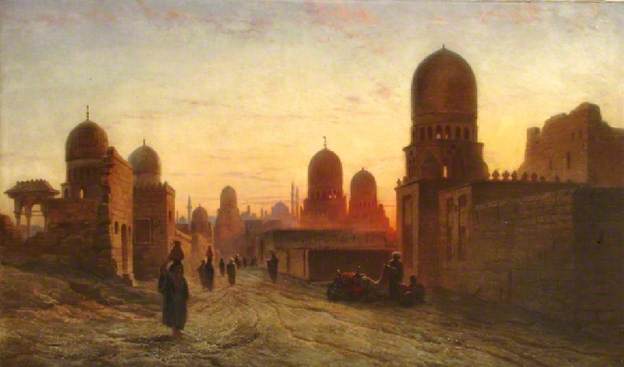
Voices from Cairo
As Cairo becomes a turbulent
battleground for the soul of modern Egypt


I’ve been trying to skip read a chronicle covering the years
roughly 1500- 1515 to discover how the sultan in Cairo
reacted to the aggressive arrival of the Portuguese in the Indian
Ocean . The trouble is that the detailed accounts of daily life in
the city are so fascinating that I keep getting distracted. It’s an
extraordinary Arabian Nights world – violent, fantastical, prone to bouts of
superstition and magic, obsessed with rituals, exotic pageantry and terrible
deaths. It charts the dying years of the Mamluk dynasty who ruled much of the
Middle East – Egypt , Syria , the Arabian Peninsula
– for some two hundred and fifty years – a dynasty on the edge of collapse,
like the last years of Tsarist Russian, before extinction at the hands of the
Ottomans who marched in and killed the last sultan in 1517. It’s living on
borrowed time – but vividly.
The writer, Ibn Iyas, captures everything. There are
firework displays and processions to mark the great days of the Muslim year;
the construction of scented palaces, adorned with fruit trees and aromatic
plants, streams of running water and shady pavilions; the polo season is
declared open in the hippodrome, a horse falls during the match, the state of
sultan’s health is a subject of public interest (colic, diarrhoea). The seasons
are marked by his change of costume from wool to white cotton. The rise and
fall of ‘the blessed Nile ’, on which
everything depends, is obsessively measured at the ‘Nileometer’. Plague cuts a
swathe through the city; an outbreak of bird flu kills all the chickens; earth
tremors shake the minarets. Three people are trampled to death during a free
handout of food to the unemployed. Law and order is, to put it mildly,
something of an issue: a man kills his wife, puts her body in a barrel of tar
and sets fire to it; robbers ransack a market – they are caught and torn in two;
a revolt by the Bedouin is put down, a grand procession includes 800 heads
fixed to spears; the sheik Ahmad ibn Muhamma is paraded on a camel then hung
from the city gates…


It’s a phantasmagoria of incredible vividness…two camels
carrying flax brush the lantern hanging from a stall and catch fire. The
terrified animals stampede with their flaming cargo and trample people
underfoot, crashing through the markets, spreading death and destruction. A
report from Gaza tells of an enormous sea
creature washed ashore; the sultan writes to the governor asking him ‘to send
this fish to Cairo Zanzibar


And ‘in the first days of this month, one heard of the death
of Aziza bint Sathi, one of the most famous singers in Egypt Egypt
I wonder what she sounded like. I’d love to have heard her
sing.
Saturday, 29 June 2013
Midsummer England

It’s the Glastonbury Festival this weekend but we went to a more cultural version of this midsummer celebration of tribal identity – the Royal Shakespeare Company’s production of As You Like It in Stratford-on-Avon. Every thing the RSC do is amazing, and this was quite quite wonderful. Drawing on Shakespeare’s deep affinity with the folk customs and seasonal rhythms of the forest of Arden – the area around Stratford – the RSC dreamed up a modernised, Glastonbury-like, recreation of the earth celebrations of pagan England – a world of horned men, primal dancing, cross-dressing and fertility rites, exquisite music by Laura Marling and the kind of audience connection that only fantastically well-done live theatre can provide. An energetic celebration of the spirit of midsummer.

Coming out into the dark, swans float asleep on the River Avon; the trees of Warwickshire are in full sail, like ships on an inland sea; a deer crosses the road as we drive home; the year is at its height. Here's the trailer and some of Laura Marling's music for the play.
Coming out into the dark, swans float asleep on the River Avon; the trees of Warwickshire are in full sail, like ships on an inland sea; a deer crosses the road as we drive home; the year is at its height. Here's the trailer and some of Laura Marling's music for the play.
Subscribe to:
Comments (Atom)